
Introduction
After a long, stressful day, you finally reach home. You sit on the sofa, scroll your phone, stare at the TV, and tell people, “I am fine.”
But inside, you feel nothing.
Not happy. Not sad. Just blank.
If this sounds familiar, you might be dealing with emotional numbness. It can feel scary and confusing, but it is more common than you think. This guide will help you understand how emotional numbness feels like, how long does emotional numbness last, what emotional numbness symptoms to watch for, and what you can do to slowly feel like yourself again.
What Is Emotional Numbness And Why It Happens After Stressful Days

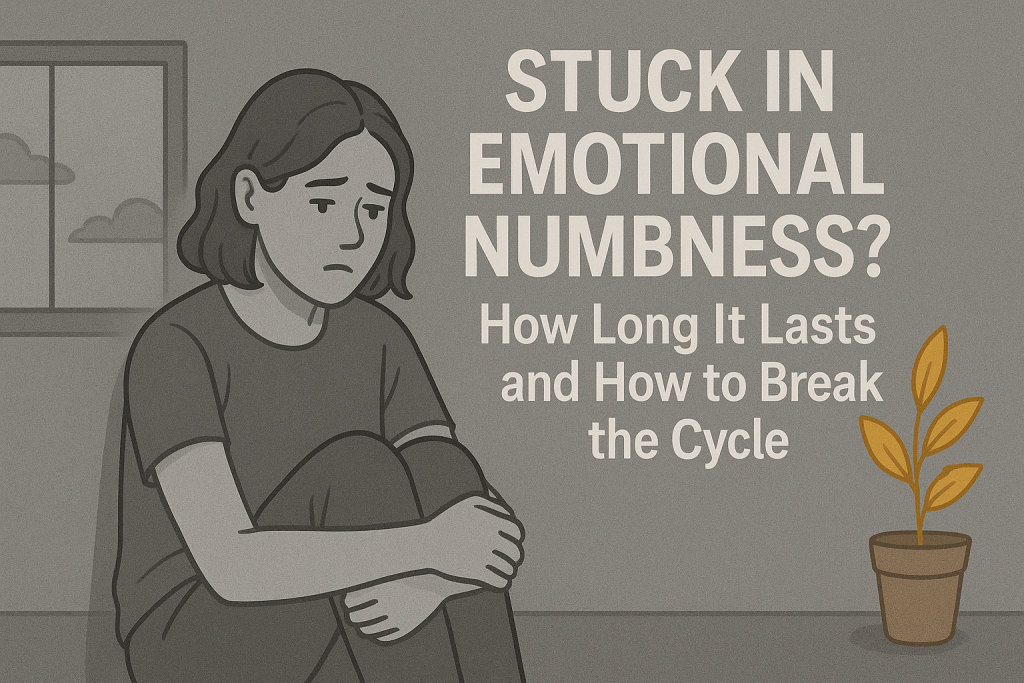
Emotional numbness is when your feelings seem switched off. You feel flat or empty instead of happy, sad, or excited.
It is not the same as being calm. Calm feels peaceful and steady. Emotional numbness feels like you are not really there, like you are cut off from your own emotions.
This often happens after stressful days. When your brain gets too overloaded, it sometimes protects you by turning your emotions down. It is like pressing a mute button on your feelings. Your mind is not trying to hurt you. It is trying to help you survive a lot of stress.
So if you feel emotional numbness after work or a long day, it does not mean you are broken. It means your system is tired and trying to cope.
How Emotional Numbness Feels Like In Real Life

Common Emotional Numbness Symptoms You Might Ignore
Emotional numbness symptoms can be easy to miss because they do not always look dramatic. You might notice things like:
- You know you should feel something, but you do not.
- You cannot feel joy even when good things happen.
- You feel disconnected from people you care about.
Other emotional numbness symptoms include:
- Feeling like you are watching your life instead of living it.
- Struggling to cry, even when something sad happens.
- Saying “I do not care” about hobbies or plans you used to enjoy.
You may also feel:
- Heavy and tired in your body.
- Foggy and slow in your thinking.
- Like you are moving through your day on autopilot.
Many people blame themselves and think they are lazy, ungrateful, or weak. In reality, emotional numbness symptoms are often a sign of stress, burnout, depression, anxiety, or old emotional pain that has gone on for too long.
Everyday Examples Of Emotional Numbness After Work
Here are some simple examples of how emotional numbness feels like in daily life:
- You get home from work, sit down, and just stare at your phone. You do not have the energy to talk, complain, or share about your day.
- Someone shares good news. You smile and say “Congrats,” but inside you feel nothing.
- You watch shows or scroll social media, not because you enjoy it, but because you do not know what else to do.
- You feel like you are acting in a role, answering messages and talking to people, but deep down you feel very far away.
Over time, you may wonder, “Where did the real me go?” This is a painful part of emotional numbness.
Emotional Numbness Vs Just Being Tired
It helps to know the difference between being tired and being numb:
- Tired: You still have emotions, but your energy is low. You can still laugh, cry, or feel touched by things, even if you are exhausted.
- Numb: Your feelings seem turned off. You feel blank and disconnected, even if you rest or sleep.
Stress, poor sleep, and long work hours can start as “just tired.” But if it goes on for too long, it can turn into emotional numbness. If you keep telling yourself “I am just tired,” but deep inside you feel empty, emotional numbness may be part of what is happening.
How Long Does Emotional Numbness Last

Normal Short-Term Emotional Numbness
For many people, emotional numbness after a stressful event is short term. When you ask, “how long does emotional numbness last?”, the honest answer is: it depends.
Often it might last:
- A few hours after a very hard day.
- A few days after a big fight, deadline, or shock.
How long emotional numbness lasts depends on:
- How intense and how frequent your stress is.
- How well you rest, sleep, and take care of yourself.
- Whether you have support from friends, family, or professionals.
If your numbness fades when you get more sleep, take a break, or calm things down, it is often a short-term stress response.
When Emotional Numbness Lasts Too Long
Emotional numbness becomes a concern when it:
- Shows up most days for weeks or months.
- Makes you lose interest in almost everything.
- Affects your work, home life, or relationships.
You may notice you:
- Feel like you are floating through life with no real interest or motivation.
- Pull away from people because you feel nothing around them.
- Feel guilty for not caring, but cannot “turn on” your feelings again.
In these cases, emotional numbness might be linked to burnout, depression, anxiety, or past trauma. It is no longer just a short break for your brain. It has become a deeper pattern that needs attention.
When To Seek Professional Help
You should consider getting professional help if:
- Emotional numbness lasts most days for several weeks or longer.
- You feel that life has lost its color, meaning, or joy.
- You have thoughts of self-harm, or feel that life is not worth living.
- You feel very disconnected from your body, your memories, or your surroundings.
A therapist, counsellor, or doctor can help you understand what is going on beneath your emotional numbness. They can also suggest tools, therapy, or treatment that fits your situation. Reaching out is not weakness. It is a strong and caring step for yourself.
Why You Get Stuck In An Emotional Numbness Cycle
The Stress And Numbness Loop
Emotional numbness can turn into a loop:
- You face a lot of stress and pressure.
- Your mind and body get overloaded.
- Your emotions shut down to protect you.
- You judge yourself and think, “What is wrong with me?”
- The shame and guilt cause more stress.
This loop keeps you stuck. Stress feeds numbness. Numbness feeds more stress and self-blame.
Breaking this cycle starts with a kinder idea: emotional numbness is not your fault. It is a signal that your system is overwhelmed.
Hidden Drivers Of Ongoing Numbness
Sometimes emotional numbness stays because of deeper reasons, such as:
- Burnout: Long-term work or caregiving stress that never eases.
- Unresolved trauma or grief: Painful events that were never processed or spoken about.
- Depression or anxiety: These can show up as emptiness, not just sadness or fear.
You do not have to label yourself, but knowing these drivers can help you see why emotional numbness does not simply disappear.
Protective, Not Broken: What Your Body Is Trying To Do
It may help to see emotional numbness in a new way.
Your body and brain are not trying to ruin your life. They are trying to protect you when things feel like “too much.”
Emotional numbness can be your system saying:
- “I need a break.”
- “I cannot handle all these feelings right now.”
- “I will turn emotions down so you can get through this moment.”
When you understand this, it becomes easier to treat yourself with kindness instead of anger. You can ask, “What support do I need?” instead of “Why am I like this?”
How To Break The Emotional Numbness Cycle (Step By Step)

Step 1: Notice And Name What Is Happening
The first step is simple awareness. Try saying to yourself:
“I feel emotional numbness right now. My body is trying to protect me.”
This small sentence helps you stop blaming yourself and start understanding yourself.
Then try a short grounding exercise:
- Put your feet on the floor.
- Take 3 slow, deep breaths.
- Look around and name 3 things you can see, 3 things you can hear, and 3 things you can feel (like your clothes or the chair).
This brings you gently back into the present moment, even if you still feel num
Step 2: Gently Reconnect With Your Body
When you are emotionally numb, thinking more does not always help. It is often better to start with your body.
Try simple actions for 2 to 5 minutes:
- Take a warm shower and focus on how the water feels on your skin.
- Do light stretching and notice how your muscles feel.
- Go for a short walk and pay attention to your steps, the air, and the sounds around you.
- Place one hand on your chest and one on your belly, and breathe slowly.
The goal is not to force emotions. The goal is to show your body, “You are safe here.”
Step 3: Do A Tiny Emotional Check In
Next, invite your emotions in, but in a very gentle way.
You can:
- Write one sentence in a notebook: “If my numbness could talk, it would say…”
- Finish this sentence: “Today was stressful because…”
- Rate these from 0 to 10:
- How stressed do I feel
- How tired do I feel
- How connected to myself do I feel
- How stressed do I feel
This does not have to be a full journal session. A few honest lines are enough to start reconnecting with how emotional numbness feels like inside you.
Step 4: Choose Low Pressure Connection
Big social events may feel too hard when you are emotionally numb. That is okay. Start small.
Some low pressure ways to connect:
- Text someone you trust: “Hey, I do not know what to say, but I did not want to disappear.”
- Sit in the same room as a family member or friend, even if you are quiet.
- Spend time with a pet.
- Listen to a calm podcast or music that makes you feel less alone.
You do not have to talk a lot. Sometimes just not being alone is enough to soften emotional numbness a little.
Step 5: Protect Your Sleep After Stressful Days
Sleep plays a big role in how long emotional numbness lasts. Poor sleep makes it much harder for your brain to process feelings and stress.
To protect your sleep:
- Set a time when you stop reading work messages.
- Avoid heavy news or intense shows right before bed.
- Turn lights down and do something gentle, like reading or listening to calming sounds.
- Try to sleep and wake at similar times each day.
Good sleep will not fix everything, but it can slowly lower stress and emotional numbness over time.
Long-Term Habits To Reduce Emotional Numbness

Build A Daily Decompression Ritual After Work
Instead of jumping from work stress straight into family, chores, or social media, give yourself a daily cool down.
For 10 to 20 minutes after work, you can:
- Take a short walk.
- Stretch or do light yoga.
- Sit quietly with a drink and do nothing.
- Write a quick “end of day” note:
- “What drained me today”
- “What helped me today”
- “What drained me today”
This helps your brain understand that the stressful part of the day is over, which can reduce emotional numbness at night.
Set Boundaries With Work And Devices
Constant messages and notifications keep your mind in stress mode and can trigger emotional numbness.
A few simple boundaries:
- Decide what time you stop replying to work messages.
- Turn off non essential alerts on your phone.
- Avoid late night scrolling, especially on upsetting news.
Your brain needs off time. Healthy boundaries help emotional numbness ease because your system learns it can relax.
Move Your Body Regularly (Without Overdoing It)
You do not need a hard workout plan to help emotional numbness. Start small and gentle.
Ideas:
- Walk for 10 minutes most days.
- Stretch while you watch TV.
- Follow a short, easy video at home.
Movement improves your mood and helps your brain regulate emotions. It also helps you feel more alive in your body, instead of feeling stuck in your head.
Grow Your Emotional Vocabulary
Sometimes we feel emotionally numb because we only know a few feeling words. Everything else feels confusing.
You can grow your emotional vocabulary by:
- Looking at an emotion list or feeling wheel once a day and choosing one word that fits.
- Using this simple sentence: “Right now I feel ____, and I need ____.”
- Being more honest with yourself, for example:
- “I am not fine. I am overwhelmed and tired.”
- “I am not fine. I am overwhelmed and tired.”
The more you can name your feelings, the safer it becomes for your system to let you feel them. This can slowly reduce emotional numbness symptoms over time.
Therapy, Coaching, And Support Groups
You do not have to handle emotional numbness alone.
Therapy can:
- Give you a safe space to talk.
- Help you explore the roots of your emotional numbness.
- Offer tools and skills to cope in healthier ways.
Support groups and coaching can give you community, encouragement, and new ideas. Asking for help is a smart step, not a failure.
Emotional Numbness Vs Burnout, Depression, And Anxiety

Emotional Numbness Vs Burnout
Burnout often involves:
- Deep tiredness that does not go away with rest.
- Lower work performance and focus.
- Feeling negative or distant about your job.
Emotional numbness can be part of burnout. You may stop caring about work, even if it used to matter a lot. If your numbness is closely tied to your job or caregiving role, burnout may be part of the picture.
Emotional Numbness Vs Depression
Depression often includes:
- Ongoing low mood and sadness.
- Hopeless or dark thoughts.
- Loss of interest in many parts of life.
- Changes in sleep or appetite.
Some people with depression feel more numb than sad. They say things like “I feel empty” or “I feel nothing.”
Emotional numbness by itself does not always mean you have depression. But they can overlap. Only a trained professional can tell you for sure and offer proper treatment.
Emotional Numbness Vs Anxiety
Anxiety usually feels like:
- Constant worry and “what if” thoughts.
- Restlessness and trouble relaxing.
- A sense that something bad might happen soon.
Emotional numbness can show up after long periods of anxiety. When your body cannot handle more fear, it might shut down feelings to protect you.
Some people swing between high anxiety and deep numbness. This is another sign that your system is under a lot of pressure and needs care and support.
Say Goodbye to Feeling Emotionally Numb
Still feeling disconnected, detached, or “blank,” even when nothing is wrong? Emotional numbness can be confusing and exhausting, but you don’t have to navigate it alone.
👉 Join our 7-Day Energy Booster Program and learn simple daily practices that help you reconnect with your emotions, calm your nervous system, and break the cycle of shutdown.
In just one week, you’ll:
- Understand the real causes behind emotional numbness
- Try grounding exercises that activate your emotional awareness
- Address hidden triggers like burnout, chronic stress, or overwhelm
- Learn gentle habits that restore energy, clarity, and emotional balance
Start today. Feeling alive and connected again is closer than you think.
Emotional numbness can feel scary and isolating, but it’s not permanent
By understanding why your mind shuts down, how stress affects your nervous system, and what simple daily habits help you reconnect, you can slowly start to feel again. Small actions—like grounding exercises, gentle movement, breathwork, or even taking mindful breaks—can begin to wake up your emotions and bring you back to yourself.
If the numbness keeps lingering, don’t ignore it. There may be deeper triggers like burnout, past trauma, or chronic stress patterns that need support and guidance.
This is your chance to book your FREE 30-Minute Zoom Clarity Session with me.
This is your space to get personal guidance so you can keep moving forward with confidence.
Feel Again, Not Just Get Through the Day
Can you really break out of emotional numbness and start feeling like yourself again? Yes, you can. The first step is understanding why numbness happens and what simple actions can help your mind and body reconnect.
Think of emotional healing as more than just “getting over it.” It is a slow and steady process that helps you feel safe, present, and in control again. Small everyday habits can open the door to clarity, calm, and real emotional strength.
And if working through numbness feels too heavy or confusing, you do not have to figure it out alone. Our team is here to guide you in a warm, simple, and supportive way.
✅ Take Action Now
Frequently Asked Question
1) Is emotional numbness normal after a stressful day
Yes. Short-term emotional numbness can be a normal response to stress. Your mind turns feelings down so you can cope with overload. If it passes after rest and self care, it is usually your body protecting you.
2) How long does emotional numbness last for most people
For many people, emotional numbness lasts a few hours to a few days after stress. Good sleep, lower stress, and support can help it fade. If you keep asking yourself “how long does emotional numbness last” because it has been present most days for weeks or months, it may be time to get professional help.
3) What are the key emotional numbness symptoms I should look out for
Key emotional numbness symptoms include feeling flat, disconnected from your own life, and not reacting much to good or bad events. You might lose interest in things you used to like and feel like you are living on autopilot. Brain fog, low energy, and pulling away from people can also appear with emotional numbness.
4) How emotional numbness feels like compared to being calm
Calm feels peaceful and present. You still have emotions, but they are steady and easier to manage. Emotional numbness feels empty and distant, like your feelings are switched off. Calm is “I feel okay.” Numb is “I do not feel much at all.”
5) Can emotional numbness go away on its own
Yes, mild emotional numbness can fade with time, rest, and healthy habits like movement, connection, and sleep. But if numbness is strong, long lasting, or linked to trauma, depression, or burnout, it may not fully clear without support. A therapist or doctor can help you heal more deeply and find better ways to cope.

