
Introduction
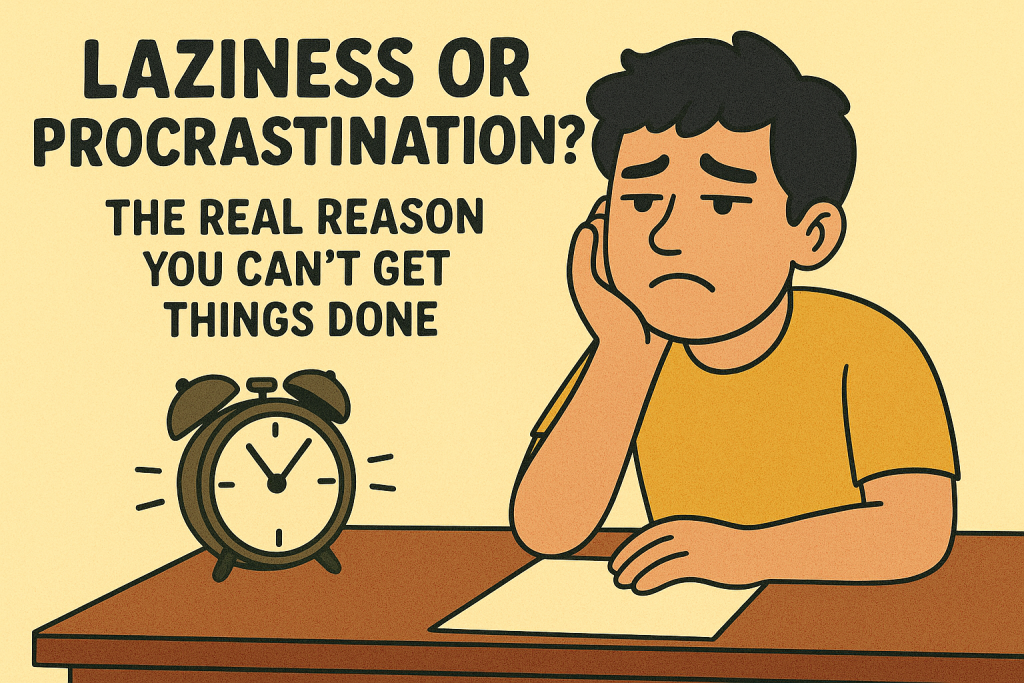
You know the feeling. You have a big task waiting, but instead of starting, you check your phone, grab a snack, or clean your desk. Then the guilt sets in, and you wonder why you can’t just focus.
If that sounds like you, you’re not lazy. You’re stuck in procrastination, one of the most common habits that stop people from reaching their goals.
Let’s explore what is procrastination, how it’s different from laziness, and what you can do to break the cycle.
Understanding Procrastination: More Than Just Laziness

What Is Procrastination
Procrastination means delaying a task even when you know it will cause stress later. It’s not about being lazy. It’s about how your brain tries to avoid uncomfortable emotions such as fear, stress, or doubt.
For example, you might want to send an important email but think, “What if I say something wrong?” That fear makes you open social media instead. Your brain gets a small reward for escaping discomfort, and procrastination becomes a habit.
Understanding what is procrastination helps you realize it’s emotional, not moral. It’s not about being bad at time management. It’s about how you respond to pressure.
Laziness vs. Procrastination
People often confuse laziness and procrastination, but they’re not the same.
Laziness means you don’t want to do anything at all. Procrastination means you want to act but feel blocked inside. You care about the task, but your emotions get in the way.
If you plan to start working out but keep putting it off, it’s not laziness. It’s procrastination caused by mental and emotional resistance. Recognizing this difference is the first step to change.
The Mental Blockage Behind Procrastination

Understanding Mental Blockage Meaning
A mental blockage happens when you know what to do but can’t make yourself start. Psychologists describe it as a kind of brain freeze caused by stress, fear, or perfectionism.
The real mental blockage meaning is simple. Your brain protects you from discomfort by creating excuses or distractions. You’re not weak. You’re wired for comfort.
Common mental blocks include:
- Fear of failure
- Overwhelm from too many steps
- Pressure to be perfect
Each of these creates emotional weight that keeps you stuck.
The Role of Emotions
Most procrastination comes from emotions, not laziness. Fear, stress, or guilt can all stop you from moving forward.
For instance, you might delay writing your resume because it reminds you of career pressure. Once you name that fear, it loses power. The key is to notice the feeling behind your avoidance and face it kindly.
The Science of Motivation
Your brain loves instant rewards. When you scroll online, you get a quick hit of dopamine, the chemical that makes you feel good. Big, long-term tasks don’t offer that quick payoff, so your brain resists.
The trick is to build momentum with small wins. Start tiny, celebrate progress, and your motivation will grow naturally.
The 2 Minute Rule works well. If something takes less than two minutes, do it now. Often, starting is the hardest part. Once you begin, your brain keeps going.
Proven Strategies to Beat Procrastination

Start Small and Build Momentum
The first step to overcoming procrastination is simply to start. Break tasks into small actions. If you want to write an essay, start with one sentence. If you need to clean, begin with one shelf.
Small wins give your brain quick success signals, building confidence and energy to keep going.
Time Blocking and Focus Sessions
Time blocking means setting aside specific chunks of time for focused work. Try 25 minutes of deep focus followed by a 5 minute break, a simple version of the Pomodoro Technique.
This helps you stay productive without feeling overwhelmed. Each block feels doable, and finishing one gives a sense of progress.
Accountability and Rewards
Tell a friend your goal or use an app like Focusmate or Todoist. When others know your plan, you’re more likely to follow through.
Reward yourself for sticking to your plan. A small treat, a walk, or your favorite show can help you stay motivated. Positive reinforcement keeps you moving.
Change Your Self Talk
Words matter. Replace “I’m lazy” with “I’m learning to take action.” This small shift helps you build a growth mindset instead of guilt.
When you start thinking like a learner instead of a failure, procrastination loses its grip.
Helpful Tools and Techniques

Apps That Help You Stay Consistent
- Notion for organizing goals and tracking progress
- Todoist for prioritizing daily tasks and deadlines
- Habitica for turning habit tracking into a fun game
- Focusmate for staying accountable with real time focus partners
These tools make it easier to stay consistent and see how much you’re achieving.
Mindfulness and Journaling
When you feel stuck, pause and take a deep breath. Write down your thoughts.
Ask yourself:
What’s making this task feel hard?
What’s one small step I can take right now?
This kind of reflection breaks emotional resistance and helps you get back on track.
When to Ask for Help

When Procrastination Is More Than a Habit
If procrastination affects your work, school, or relationships, it might be linked to deeper issues like anxiety, ADHD, or depression.
Therapists and coaches can help you uncover patterns, manage emotions, and create better systems for focus. Sometimes, asking for help is the most productive thing you can do.
Get Things Done, Without the Guilt
So, is it really laziness, or is there something deeper behind why you can’t seem to start?
Often, it’s not about being lazy at all. It’s about hidden stress, mental fatigue, or fear of failure that keeps your brain in freeze mode. Understanding what’s really holding you back is the first step to breaking the cycle.
Think of productivity not as constant motion, but as balance, working with your energy, not against it. And when motivation feels impossible, our tribe is here to help you find your rhythm again, without the guilt or pressure.
✅ Take Action Now
Overcome Procrastination, One Step at a Time
Feeling stuck and calling yourself lazy? You’re not alone, and it’s not true laziness. Often, procrastination comes from hidden causes like stress, burnout, or perfectionism. By understanding what’s really holding you back, you can start making steady progress again.
Small changes, like breaking tasks into smaller steps, creating a calming routine before work, or addressing your mental blocks, can make a big difference. If your lack of motivation continues, don’t ignore it. It may be a sign that your body or mind needs support to reset.
This is your chance to book your FREE 30-Minute Zoom Clarity Session with me, your opportunity to get personal guidance and rebuild your momentum.
Break Free from Procrastination
Still struggling to get things done, no matter how many to-do lists you make? You’re not lazy, you just haven’t learned how to work with your mind, not against it.
👉 Join our 7-Day Energy Booster Program and discover simple mindset shifts, stress-relief methods, and productivity habits that help you finally stop overthinking and start doing.
In just one week, you’ll:
✅ Learn the real reasons behind your procrastination (it’s not lack of willpower!)
✅ Try proven focus techniques to overcome mental fatigue
✅ Address hidden triggers like stress, perfectionism, or burnout
✅ Build small daily habits that bring back clarity, energy, and motivation
Start today, your productive, focused self is just 7 days away!
Frequently Asked Question
1) What causes procrastination
Procrastination happens when emotions like fear, self doubt, or stress make you avoid a task. It’s your brain’s way of protecting you from discomfort.
2) How is laziness different from procrastination
Laziness means no desire to act. Procrastination means you care but feel mentally blocked. It’s a reaction to emotion, not a lack of effort.
3) What is mental blockage meaning in daily life
It’s when your thoughts or emotions freeze your ability to act. You want to do something but feel trapped or distracted.
4) Can procrastination go away
It can be managed. With awareness, structure, and emotional balance, you can train your brain to act sooner and build consistency.
5) How can I stop procrastinating fast
Use the 2 Minute Rule. Start small. Once you begin, momentum will carry you forward.

