
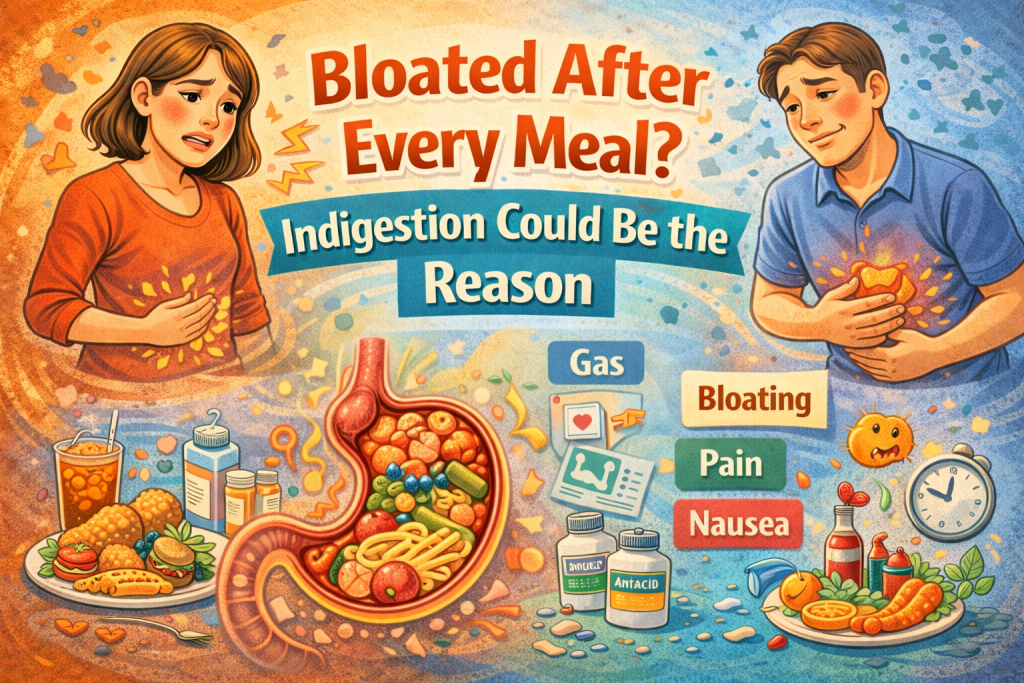
Introduction
You finish eating a normal meal.
Not heavy. Not greasy.
Yet soon after, your stomach feels tight.
You feel bloated. Uncomfortable. Sometimes even slightly short of breath.
If this keeps happening, you are not imagining it.
For many adults, this pattern points to indigestion.
Indigestion does not always mean sharp pain. Very often, indigestion shows up as bloating, pressure, fullness, or a lingering uncomfortable feeling after meals. Understanding the cause of indigestion is the first step toward relief.
What Is Indigestion and Why It Often Causes Bloating

What indigestion really means (more than stomach pain)
Indigestion is a term used to describe poor or slow digestion in the upper digestive system.
It can feel like:
- Bloating
- Fullness after small meals
- Pressure in the upper stomach
- Mild nausea
- A heart burn feeling in some people
Bloating is one of the most common signs of indigestion, even when there is no pain.
Common symptoms of indigestion after eating
Symptoms of indigestion often appear after meals and may include:
- A tight or swollen stomach
- Trapped gas
- Pressure that does not ease
- Mild chest or upper stomach discomfort
These symptoms may come and go, which is why indigestion is often ignored early on.
The most common cause of indigestion in modern diets
The most common cause of indigestion is not one specific food.
It is often how people eat and live.
Common causes include:
- Eating too quickly
- Eating large portions
- Eating while stressed or distracted
- Lying down soon after meals
- Frequent intake of heavy or processed foods
Over time, these habits slow digestion and increase bloating.
Persistent Bloating After Meals, Why It Keeps Happening

How indigestion leads to trapped gas and fullness
When indigestion slows digestion, food stays longer in the stomach.
Gas builds up.
Pressure increases.
The abdomen feels swollen.
This is why indigestion often causes bloating after meals rather than during them.
Why bloating feels worse after normal-sized meals
When digestion is already sensitive, even normal portions can feel too much.
The stomach empties slowly.
Gas builds faster than it can release.
Bloating becomes frequent.
Difference between occasional bloating and chronic indigestion
Occasional bloating is common.
Chronic indigestion often includes:
- Bloating after most meals
- Symptoms lasting weeks or months
- Predictable discomfort after eating
This pattern suggests digestion needs support.
Indigestion vs Heartburn, How to Tell the Difference

What a heart burn feeling actually feels like
A heart burn feeling often includes:
- Burning in the chest
- Tightness behind the breastbone
- Warmth rising toward the throat
- Sour taste in the mouth
It often feels worse when lying down or bending forward.
Why indigestion and heartburn often overlap
Indigestion and heartburn are different, but they often occur together.
Slow digestion increases stomach pressure.
That pressure pushes acid upward.
This causes heartburn symptoms alongside indigestion.
When indigestion symptoms may point to acid-related issues
If indigestion is often paired with:
- Frequent heart burn feeling
- Acid reflux
- Night-time discomfort
Acid-related conditions may be involved and should be checked.
Common Causes of Indigestion That Trigger Bloating

Eating too fast or too much
Fast eating adds air to the stomach.
Large meals stretch the stomach.
Both slow digestion and worsen indigestion.
Stress and its effect on digestion
Stress pulls blood flow away from digestion.
When stressed:
- Digestion slows
- Food sits longer in the stomach
- Bloating increases
This is a very common but overlooked cause of indigestion.
Foods that commonly worsen indigestion
Common trigger foods include:
- Fried foods
- Spicy foods
- Fatty meals
- Excess caffeine
- Carbonated drinks
Triggers vary, but patterns are usually consistent.
Lifestyle habits that slow digestion
Habits that worsen indigestion include:
- Eating late at night
- Lying down after meals
- Eating while working or scrolling
- Skipping meals, then overeating
Home Remedies for Acid Indigestion That Actually Help

Simple eating habits to reduce indigestion and bloating
Helpful habits include:
- Eating smaller meals
- Chewing slowly
- Sitting upright while eating
- Pausing between bites
These support digestion naturally.
Post-meal routines that support digestion
After meals:
- Stay upright for at least 30 minutes
- Take a gentle walk
- Avoid tight clothing
These reduce pressure and bloating.
Natural home remedy for acid indigestion you can try today
A gentle home remedy for acid indigestion includes:
- Drinking warm water
- Ginger tea
- Calm breathing after meals
- Avoiding late-night eating
These help digestion without harsh effects.
When Indigestion May Be More Than Just Bloating

Signs indigestion could be linked to GERD
Indigestion may be linked to GERD if symptoms include:
- Frequent heartburn
- Acid reflux
- Chest discomfort
- Night-time symptoms
Can GERD cause shortness of breath? What you should know
Yes. GERD can cause shortness of breath in some people.
Acid reflux can irritate the airway, leading to breathing discomfort, especially after meals or when lying down. This should always be taken seriously.
When to seek medical advice for ongoing indigestion
Seek medical advice if:
- Indigestion persists despite changes
- Symptoms worsen
- There is unexplained weight loss
- Shortness of breath occurs
How to Prevent Indigestion and Bloating Long Term

Daily habits that support smoother digestion
Helpful habits include:
- Regular meal times
- Adequate hydration
- Stress management
- Gentle daily movement
How meal timing and portion size affect indigestion
Large late meals are harder to digest.
Smaller meals spaced through the day reduce indigestion and bloating.
Small lifestyle changes that reduce bloating after meals
Start with small steps:
- Eat without screens
- Finish meals earlier
- Track foods that trigger indigestion
Consistency brings relief.
Feel Lighter After Meals, Not Bloated and Uncomfortable
So, can you really stop feeling bloated after every meal? Absolutely. But understanding what is causing your indigestion, and knowing what to do about it, is what helps you finally feel comfortable after eating. Think of your eating habits not just as fuel, but as a tool for better digestion, energy, and daily comfort. When your stomach feels off, it often affects your mood, focus, and confidence too. And when relief feels out of reach, our tribe is here to guide you step by step, without the overwhelm.
✅ Take Action Now
Bloating After Meals Is Not Something You Have to Ignore
Feeling bloated after every meal can be uncomfortable and frustrating. Many people think it is normal, but frequent bloating is often a sign of indigestion or poor gut habits. By learning what triggers your indigestion, improving how and when you eat, and supporting your digestion with simple daily changes, you can start to feel lighter and more comfortable after meals. Small steps, like slowing down while eating, choosing gut-friendly foods, or improving meal timing, can make a big difference. If bloating keeps coming back, do not ignore it. A health professional can help uncover hidden causes such as food sensitivities, stress, or digestive imbalances.
This is your chance to book your FREE 30-Minute Zoom Clarity Session with me. This is your chance to get personal guidance to support your digestion and keep your progress going.
Say Goodbye to Post-Meal Bloating
Feeling bloated after every meal can be uncomfortable and frustrating, but it is not something you have to live with. When you understand what is causing your indigestion and how your daily habits affect digestion, real relief becomes possible.
Simple changes like slowing down while eating, choosing gut-friendly foods, and managing stress can make a big difference. When bloating keeps coming back, it may be a sign that your body needs better support, not restriction.
👉 Join our 7-Day Energy Booster Program and learn simple digestion-friendly habits, stress relief techniques, and daily routines that support gut health and overall energy.
In just one week, you will:
- Learn common causes of indigestion and frequent bloating
- Try easy habits that help your gut digest food better
- Identify triggers like stress eating or eating on the go
- Build simple routines that support comfort, energy, and balance
Start today. Feeling lighter and more comfortable can begin in just 7 days.
Frequently Asked Question
1) What is indigestion and why does it cause bloating?
Indigestion slows digestion, leading to gas buildup and pressure, which causes bloating and fullness after meals.
2) What is the most common cause of indigestion?
The most common cause of indigestion includes overeating, eating too fast, stress, and irritating foods.
3) How do I know if my bloating is indigestion or heartburn?
Indigestion mainly causes bloating and fullness. A heart burn feeling causes burning or tightness in the chest.
4) What is a simple home remedy for acid indigestion?
Eating smaller meals, staying upright after eating, drinking warm water, and ginger tea are simple home remedies for acid indigestion.
5) Can GERD cause shortness of breath along with indigestion?
Yes. GERD can cause shortness of breath when acid reflux irritates the airway, especially after meals.

